State of Delivery
A two hour observation in Toronto


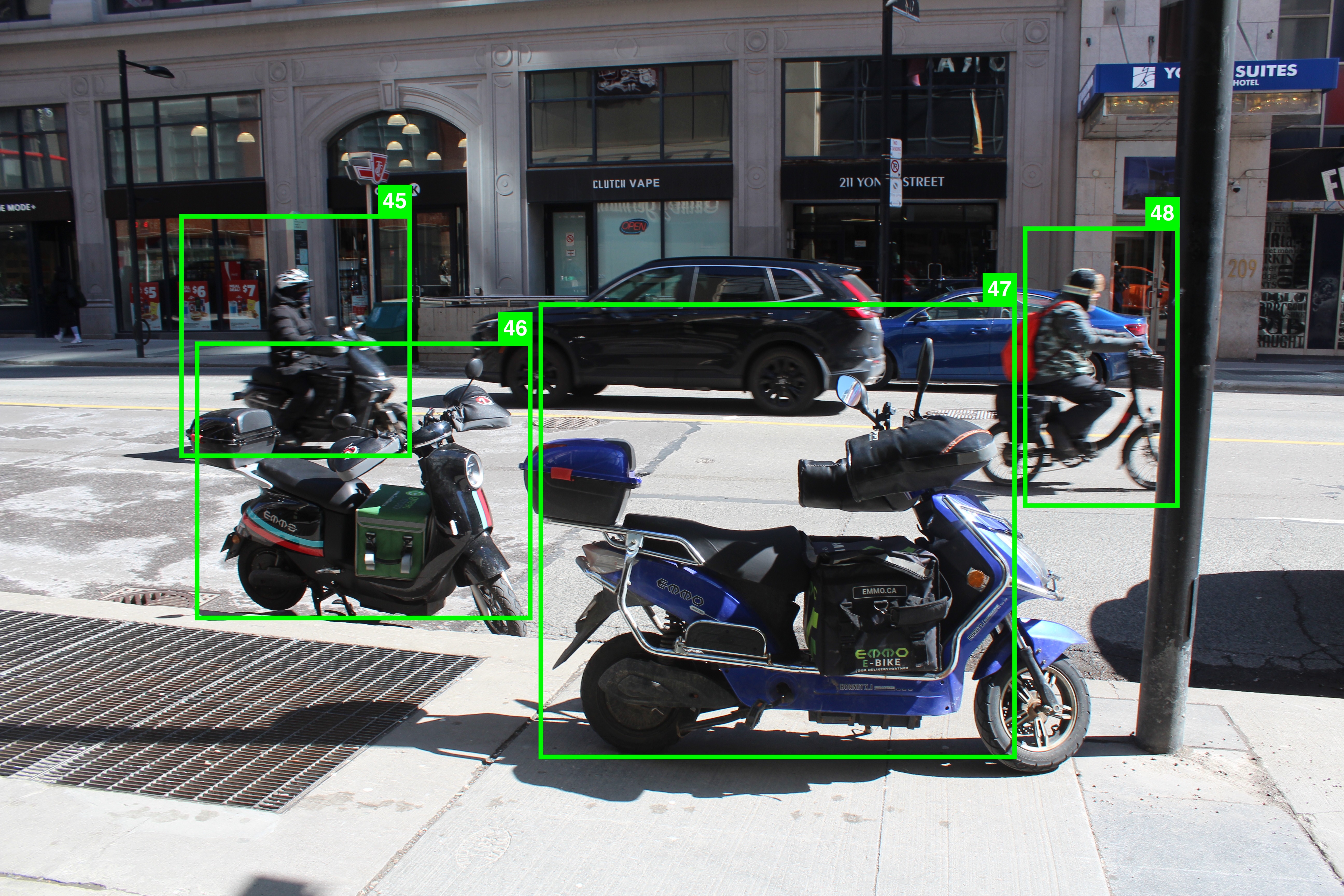
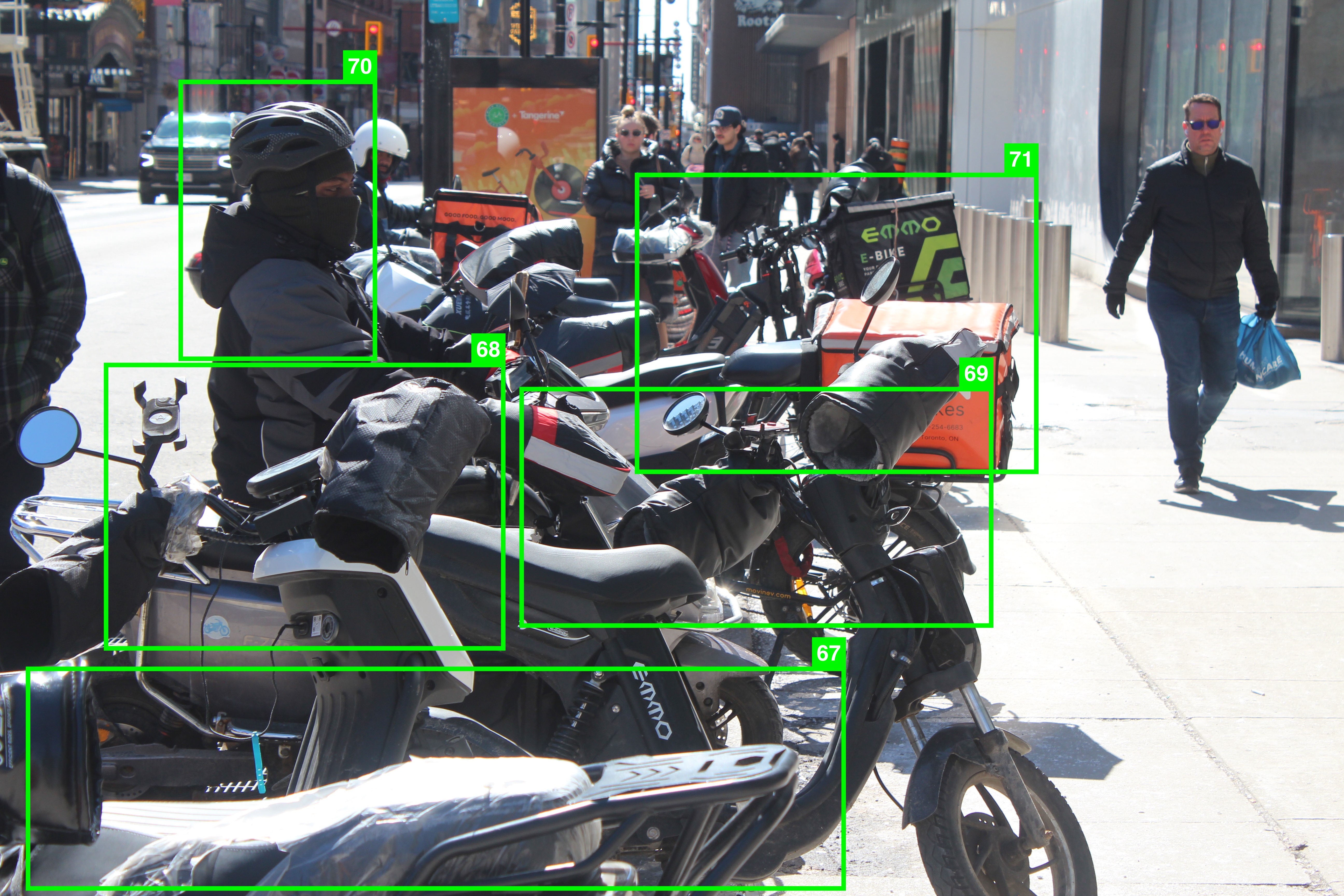
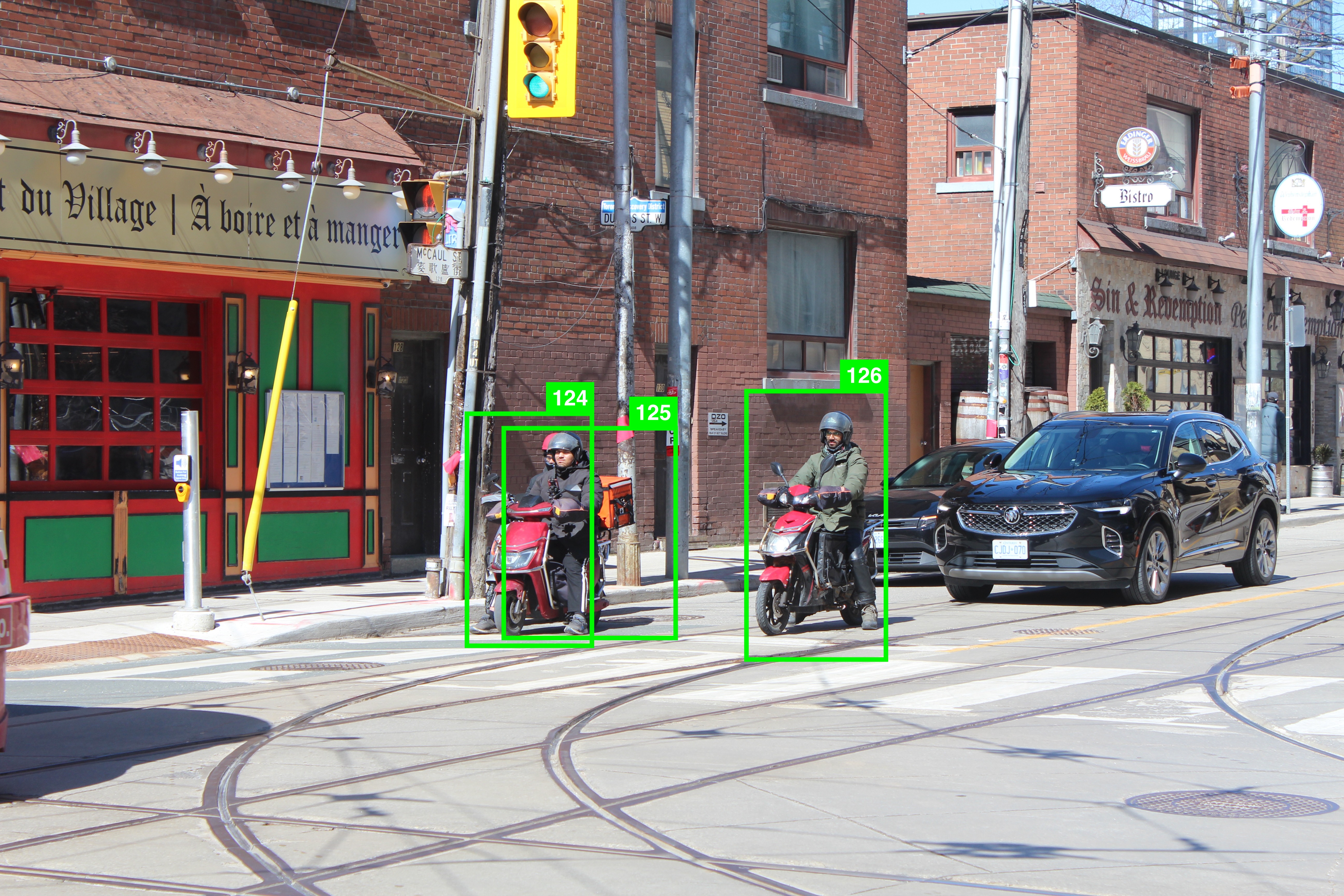
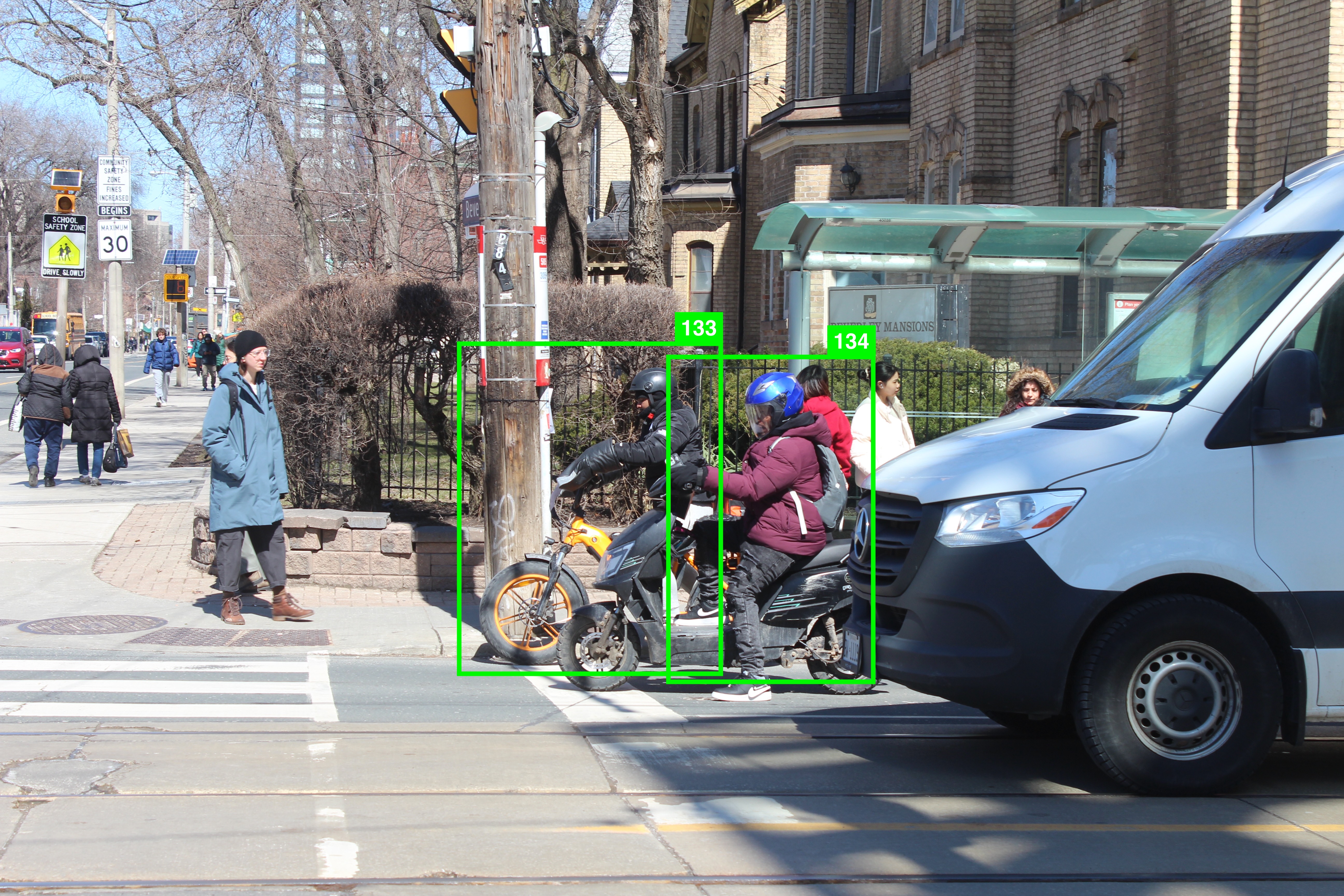
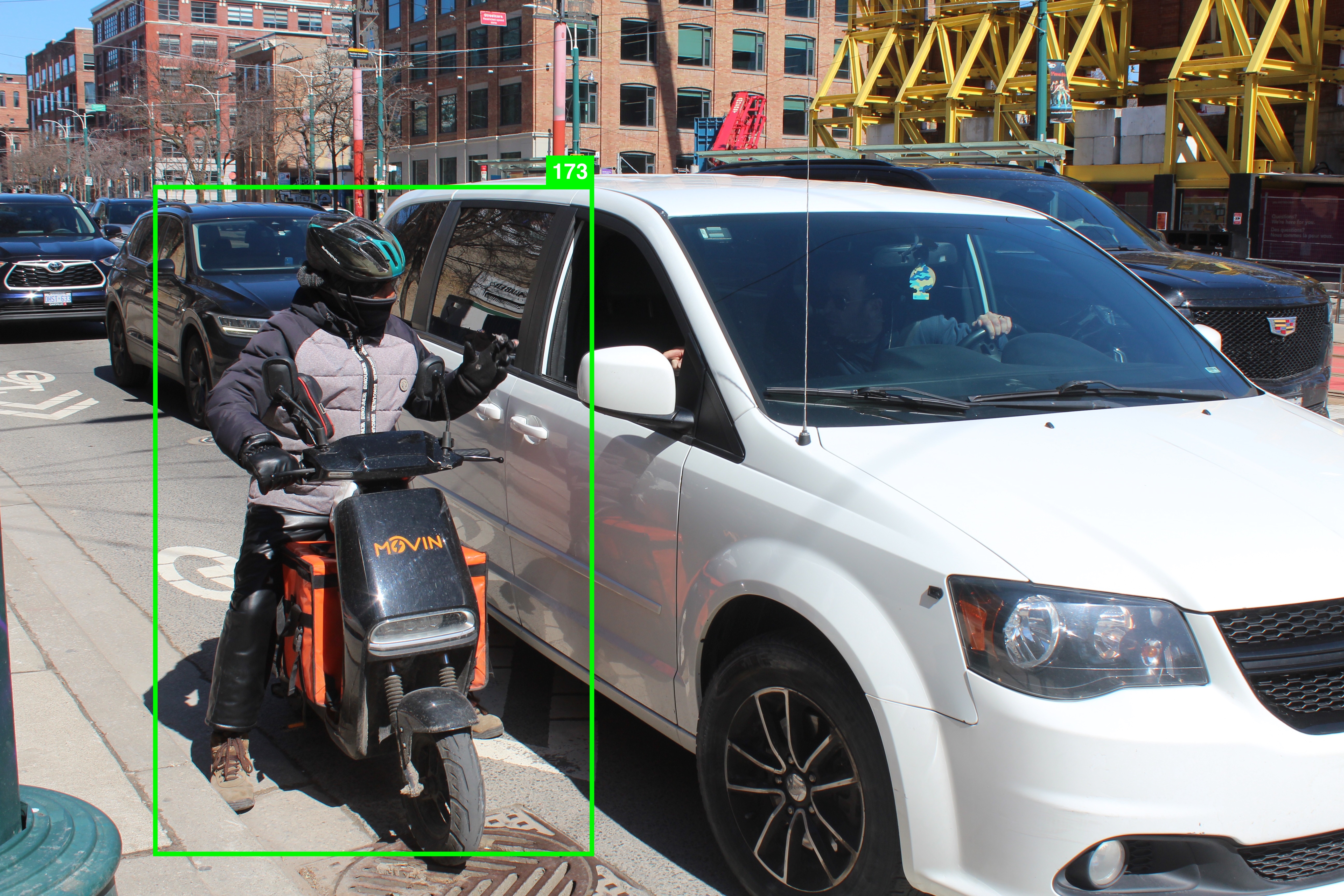
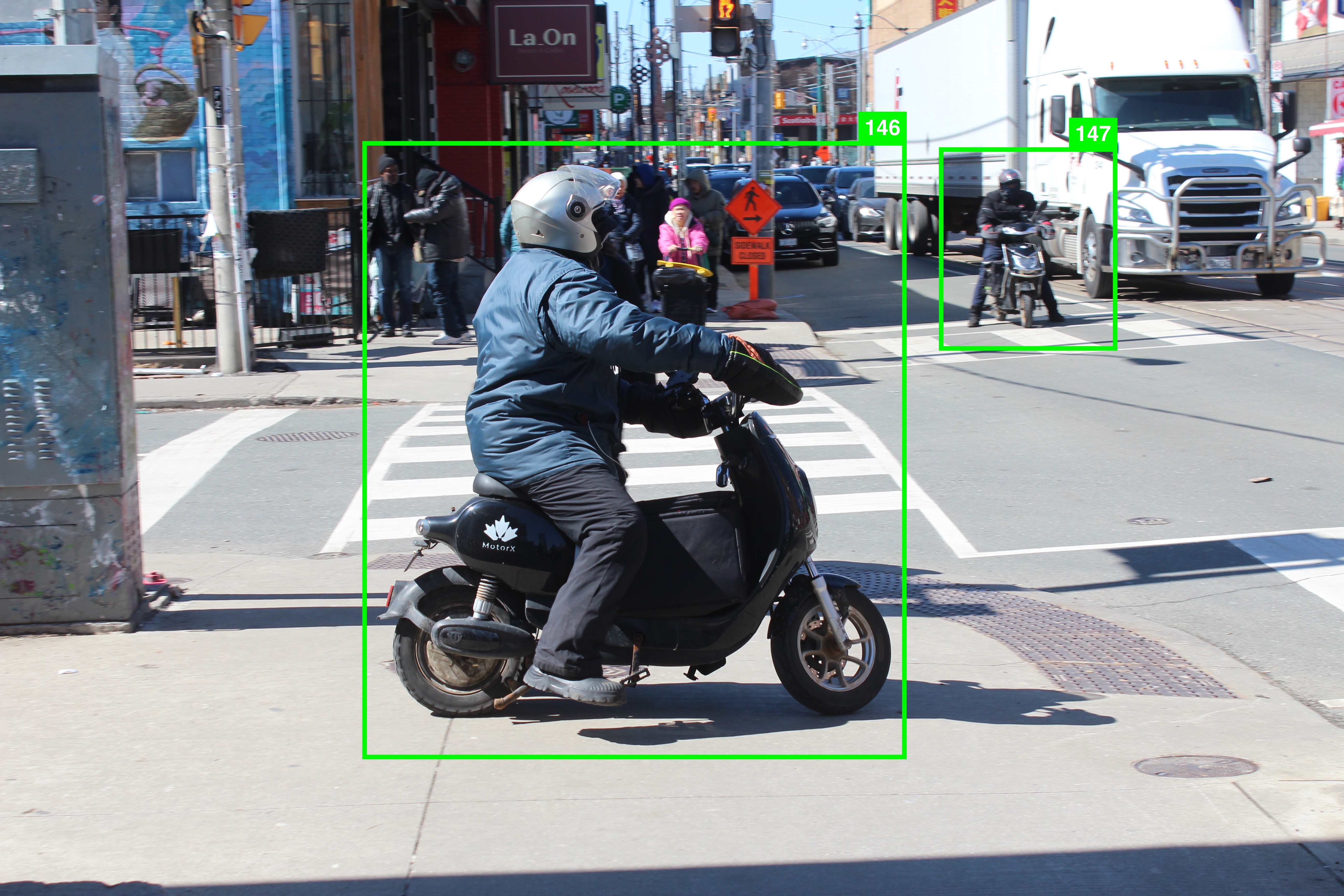
On Friday, March 27th, I walked across Toronto for 1 hour and 45 minutes, counting every delivery bike I came across. Each bike was photographed and logged.
This was conducted during a standard daytime window, not during peak dinner hours when volume would likely be higher.
My findings, along with a full essay on the system-level impacts of these services, are presented below.
Major finding
That equals
At this observed rate, you will encounter a delivery bike approximately every
32 seconds.
On one route. In one city.
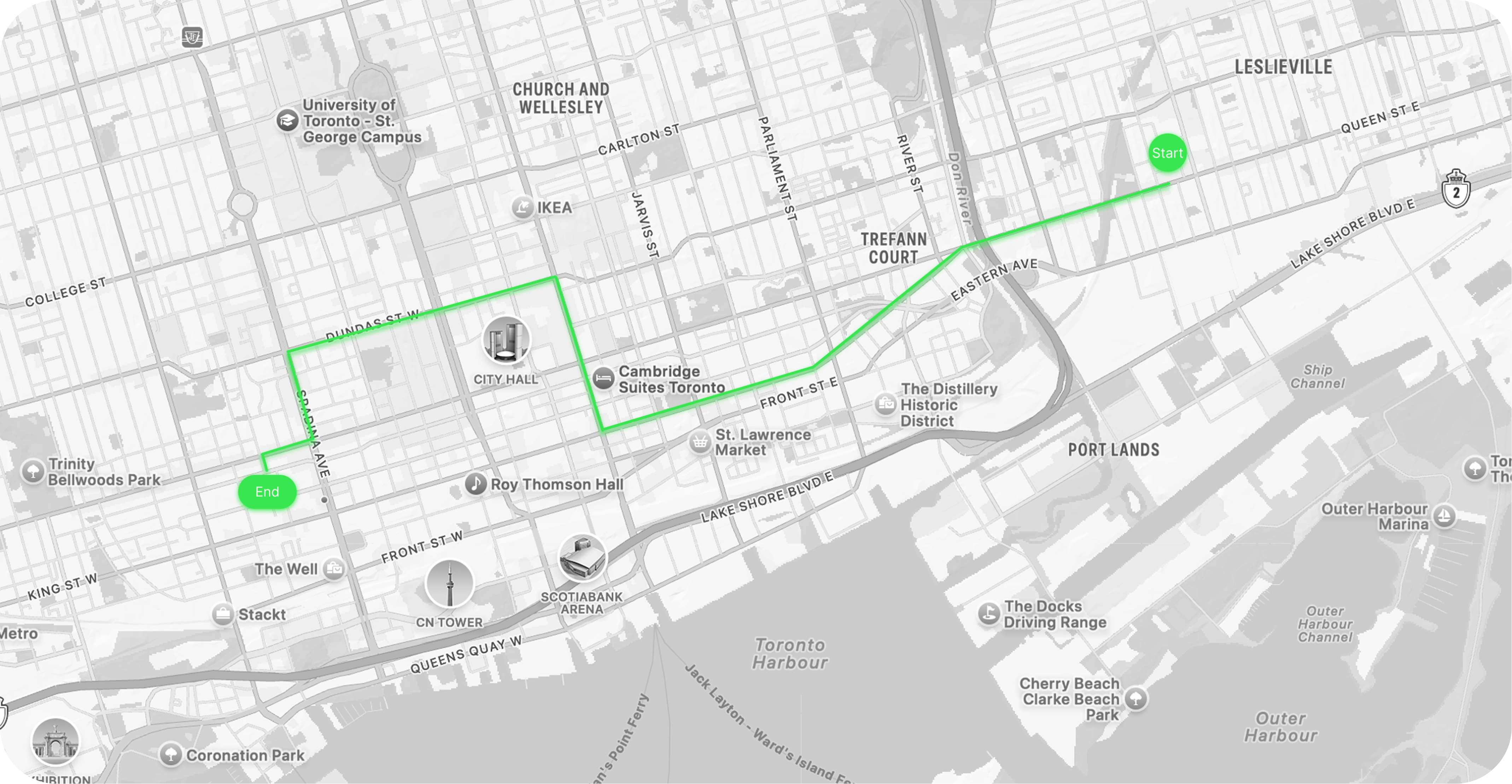
- Route: East → West across Toronto
- Covered major corridors including Dundas St. and Spadina Ave
- Ended near Waterworks Food Hall
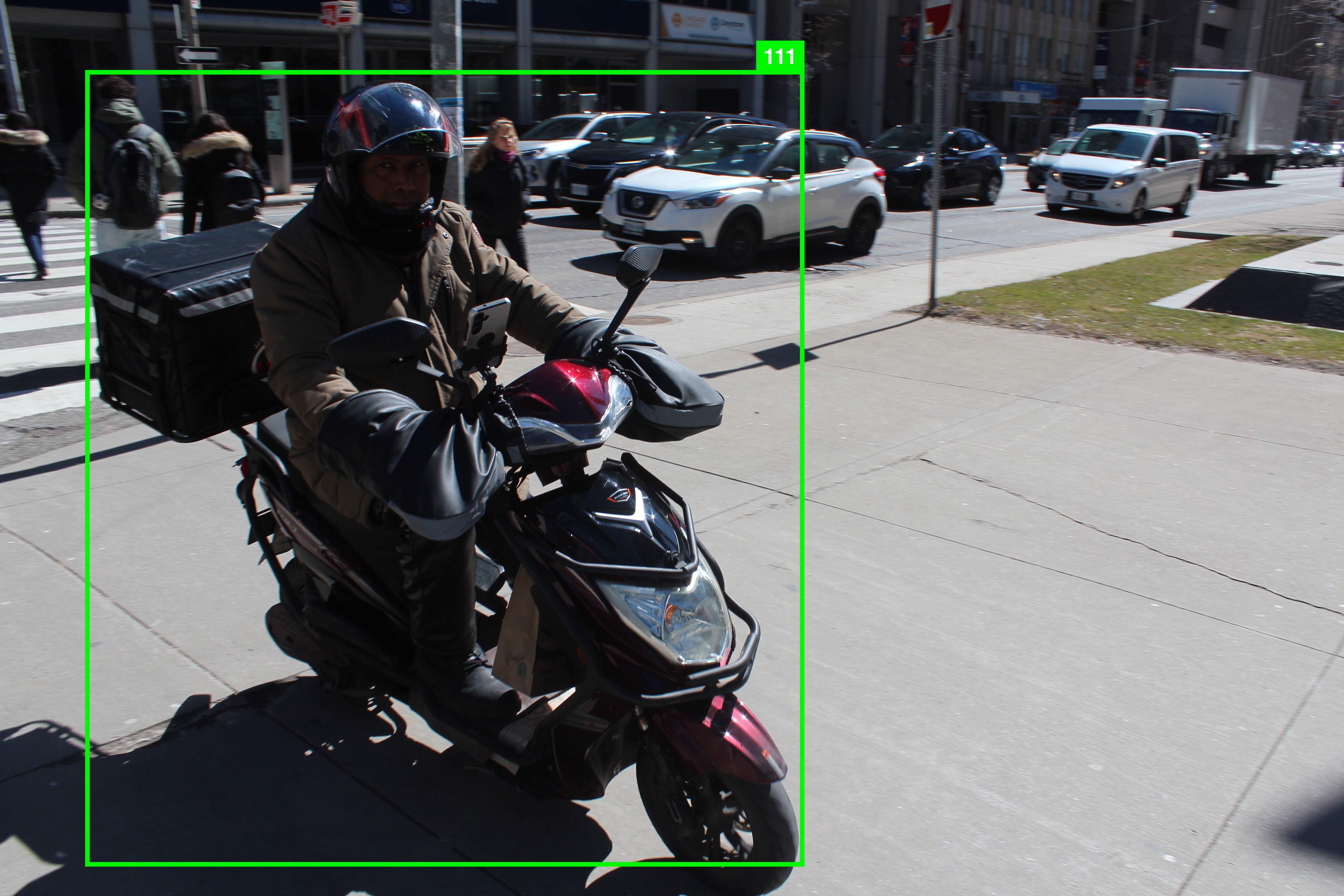
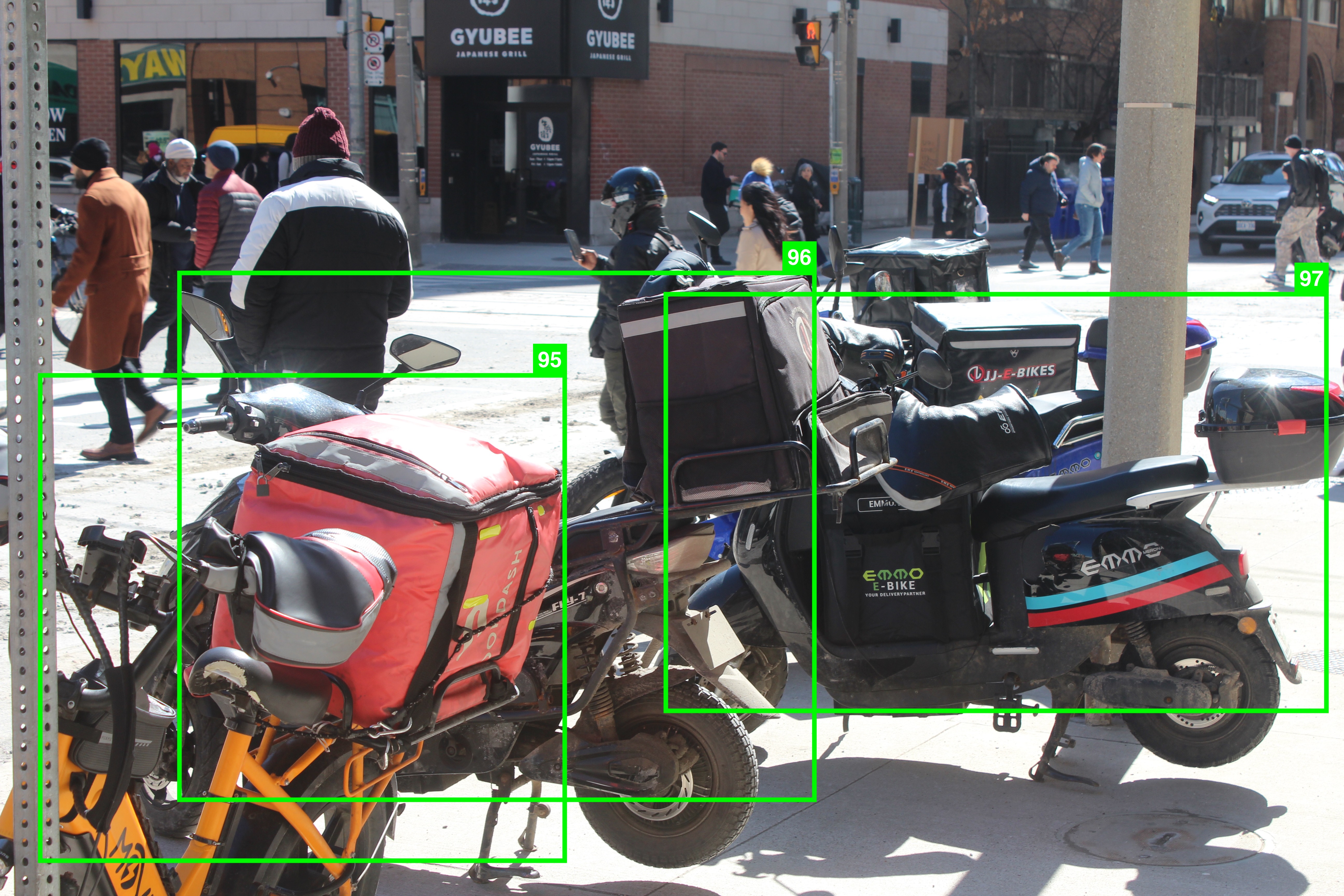
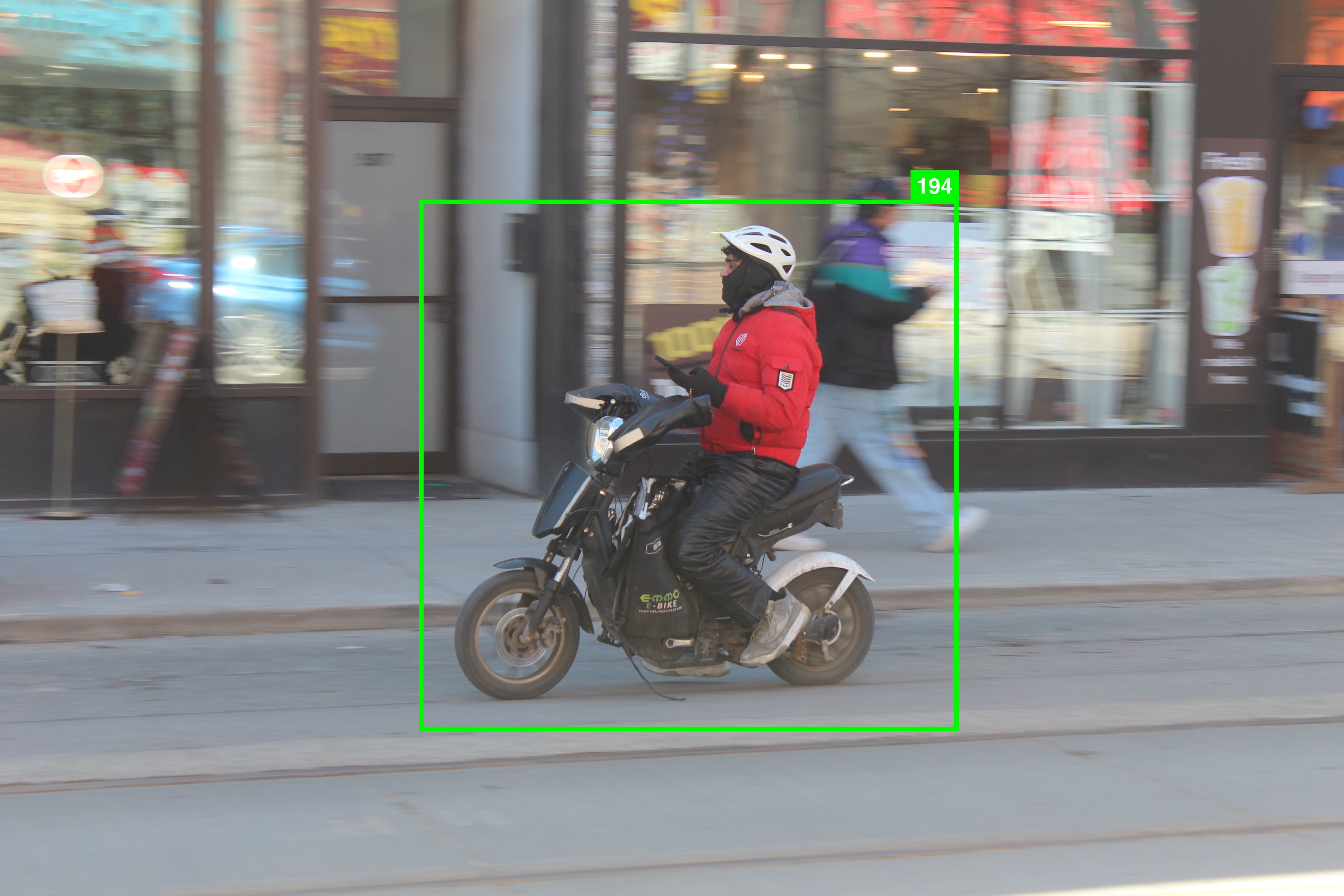
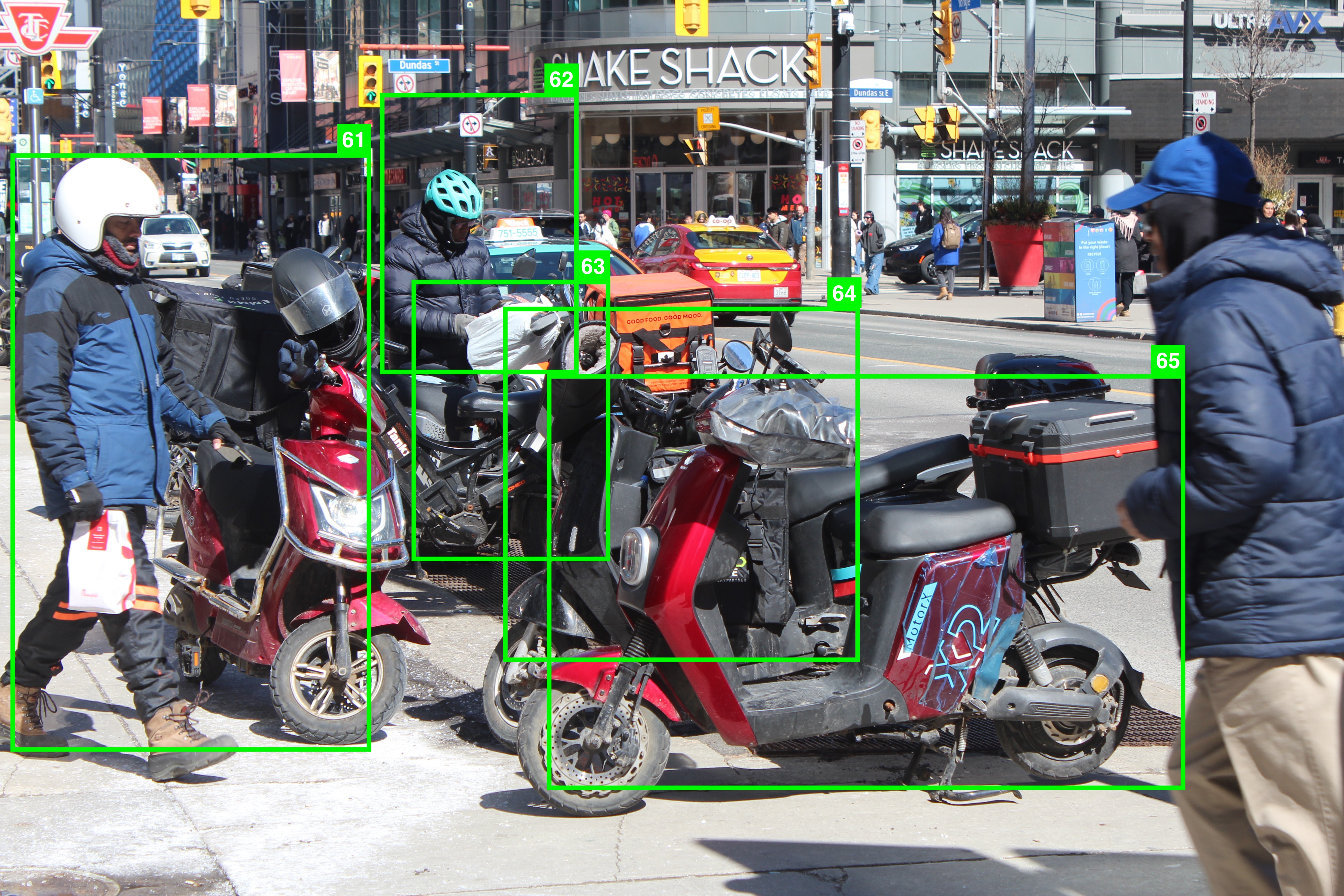
All 198 bikes were photographed and logged. The images document sidewalk riding, bikes occupying parking spaces, sidewalk congestion, and distracted driving.
One verbal altercation between a delivery rider and a motorist was also observed.
Full archive of all 198 documented bikes can be viewed here.
The Cost of Convenience:
Uber Eats and the degradation of the public realm
Uber Eats has become a fixture of modern urban life, embedded in our sidewalks, smartphones, and routines. What began as a convenience has scaled into something far more troubling. Beneath the surface of on-demand meals and sleek interfaces is a system that harms nearly everything it touches: workers, restaurants, consumers, and cities alike. It was framed as innovation, as progress. In practice, it is anything but.
Precarious Work Disguised as Flexibility
At the heart of Uber Eats lies a labour model that strips workers of basic protections. Couriers are not employees, but “independent contractors,” which allows Uber to avoid paying minimum wage, providing health benefits, or ensuring any semblance of job security. Pay is inconsistent and often meager, subject to an opaque algorithm that can reduce earnings without explanation. Workers shoulder the costs of their bikes, their data plans, and their time while Uber reaps the profit. If a business can only operate by not paying its “contractors” a minimum wage, then the business model itself is fundamentally flawed.
There have also been increasing reports of account sharing and informal subleasing, where access to delivery platforms is rented out to those without formal work authorization. This further obscures accountability and reflects how loosely regulated the system has become. In some cases, even the equipment itself is leased, adding another layer of cost to already unstable earnings.
Many of these workers are immigrants, and it’s not uncommon for them to reside in precarious living conditions. That’s not by choice. It’s a response to economic necessity. This level of overcrowding, normalized by the gig economy, places additional strain on already tight housing markets. It also suppresses wages more broadly. When a large pool of people are willing or forced to work under these conditions, it becomes harder for others to demand fair compensation in any field.
None of this is a flaw in the system. It is the system. Uber Eats doesn’t operate outside capitalism. It operates within it as a bad faith actor, bending laws and exploiting loopholes to its own advantage. These aren’t the practices of a dynamic free market innovator. They are the behaviours of a monopolistic middleman undermining the spirit of fair enterprise.
A Deteriorating Public Realm
The damage isn’t limited to labour. The public realm itself is suffering. Cities across North America and Europe are now clogged with delivery riders, many riding oversized electric bikes, often with speed limiters removed. These vehicles can reach speeds of 50 km/h and regularly occupy sidewalks, bike lanes, and pedestrian crossings with little regard for safety or rules. If one of these bikes hits a child or older person, the outcome could be catastrophic.
As someone who cycles as my main form of transportation, I’ve seen firsthand how bike lanes have become unsafe. Gig workers treat them as highways, weaving through traffic, checking their phones mid-ride, and frequently running red lights. They alternate between pedestrian and vehicle status whenever it suits them. It’s not simply inconvenient. It’s dangerous, and infrastructure hasn’t caught up.
Safety concerns extend beyond the street. Incidents involving lithium-ion battery fires on public transit and in apartment buildings have already occurred, highlighting the risks associated with the widespread use of modified or poorly maintained delivery equipment.
The Decline of Dining and Local Economies
Restaurants, often portrayed as beneficiaries of this model, are anything but. Uber Eats takes a substantial commission, up to 30 percent, on every order. Most restaurants operate on slim margins to begin with. Restaurants are pushed into a bind: raise prices on delivery platforms to offset the fees and risk losing visibility, or keep prices low to remain competitive, and operate at a loss. Over time, this creates dependency. Opting out is not a real option once customer behaviour has shifted. Meanwhile, dining rooms are disrupted by a constant churn of couriers in helmets and backpacks treating the establishment like a loading dock rather than a place of hospitality. This erosion further diminishes already scarce third places, in cities where community, conversation, and connection are meant to flourish.
The broader economic picture is equally bleak. The money extracted from each transaction does not circulate locally. Uber routes its payments through tax havens like Ireland, ensuring profits stay offshore. Executives and shareholders reap the rewards while local communities are left with the cost: more traffic, more wear on infrastructure, less taxable income, and a weakened restaurant industry. Some portion of courier earnings may also be sent abroad as remittances, further limiting how much of each transaction circulates within the local economy.
Food Quality and Safety Concerns
Even the food itself, the supposed core of the experience, suffers. Meals arrive lukewarm, soggy, or spilled, not because restaurants are careless, but because food isn’t designed to be transported this way. It sits under a heat lamp, is handed off to a rushed courier, and bounces around in a thermal backpack that, in many cases, is visibly dirty. I’ve seen backpacks with mold, caked-on residue, and worn insulation that’s likely never been cleaned. These are not inspected. There are no hygiene standards. Couriers often have nowhere to wash their hands and no access to restrooms during long shifts.
This oversight is systemic and creates clear public health risks, all for the sake of speed and scale.
Addiction to Convenience
Uber’s business model doesn’t rely solely on labour exploitation. It relies on behavioural addiction. Services like Uber One reward repeat ordering, gamifying routines that once required effort or intentionality. Even something as simple as a daily coffee or bagel can be externalized into a recurring transaction. What was once occasional has become routine.
There’s also a darker side. When users try to cancel their subscriptions, they’re met with deliberate friction and dark UX patterns. So much so that Uber has already faced legal complaints and public scrutiny over deceptive practices that make cancellation difficult or confusing. This is not a healthy relationship between a service and its users. It’s a manipulative one.
The Illusion of Affordability
One of the clearest indicators of how warped this system has become is the rise of buy-now-pay-later options for takeout. People are now financing burritos in four easy payments, courtesy of the fintech industry’s newest form of “innovation.” These companies market it as “flexibility” and “financial empowerment,” until you miss a payment and your credit gets wrecked for years. It’s not that consumers are reckless. It’s that the cost of living is unsustainable, and services like Uber Eats normalize a lifestyle that feels manageable in the moment but quietly builds long-term debt and dependency. What was once an occasional treat has become just another recurring expense, folded in with streaming subscriptions, credit card minimums, and other small monthly obligations that never seem to go away.
Environmental Cost
The environmental toll of Uber Eats extends far beyond the obvious. Thousands of short-range deliveries are made daily, often for trivial orders like a single coffee or dessert, using cars, electric bikes, or scooters. Unlike traditional courier systems that optimize for efficiency, Uber Eats follows a one-to-one model: one rider, one item, one trip. That redundancy adds up. Then there’s the waste: plastic containers, disposable utensils, insulation materials, and branded bags, all headed straight to landfill after a single use. But the environmental cost doesn’t stop at physical logistics. The digital infrastructure required to run Uber Eats — GPS tracking, algorithmic routing, app notifications, payment processing, and the constant flow of user data — relies on large-scale data centers and continuous energy consumption. The carbon footprint of the convenience economy is not only visible on the street. It quietly hums in server racks across the globe.
Surveillance and Surge: A Dangerous Combination
Uber Eats collects more behavioural data than most users realize: ordering times, frequency, location history, spending patterns, tip behaviour, and dietary preferences. This data forms a highly detailed consumer profile that Uber can use to shape pricing and behaviour. It has already been shown that Uber once embedded code in its ride-hailing app to detect when a phone was in low power mode, a signal that the user was more desperate and less likely to shop around, and would accordingly increase the price of a ride. That same logic can be applied to food. If you order often or at predictable times, you may find yourself on the receiving end of targeted push notifications and subtle price hikes through surge pricing. This is not supply and demand. It is targeted manipulation, enabled by surveillance infrastructure and designed to extract as much value as possible from individual behaviour. Food becomes less a necessity and more a test of how much you are willing to tolerate before opting out.
Predictable Criticisms
Some will argue that services like Uber Eats help people with disabilities or mobility challenges. This misses the point. Access to food and essentials for people with mobility issues should be a public responsibility, not a market opportunity for tech monopolies. It shouldn’t be the role of a for-profit app to patch the failures of our public infrastructure.
Another common critique is that arguments like this are inherently racist, since many delivery workers are people of colour. But that too is a deflection. This is a structural critique, one focused on systems, incentives, and outcomes. Shielding exploitative business models from scrutiny under the guise of inclusion does nothing to improve the conditions of those being exploited. We should be able to speak honestly about harm without having to tiptoe around identity politics.
We Should Know Better by Now
We lived without Uber Eats just five years ago. We cooked our own meals, we walked to restaurants, we interacted with neighbours and businesses. We didn’t need it then, and we don’t need it now. The only difference is how seamlessly it’s been folded into everyday life. Uber Eats isn’t a solution. It’s a symptom. A distraction from the fact that fewer people can afford to start families, buy homes, or enjoy real leisure time. Fake technological progress in place of a functioning society.
We should also recognize that many of the people doing this work deserve better. A significant number arrived with skills, degrees, and ambition, drawn by the promise of opportunity and stability. What they found instead was a patchwork of gig work, limited mobility, and unstable living conditions.
Conclusion
Uber Eats is not just a neutral service. It is a system that undermines the very fabric of civic life. It exploits labour, degrades the public realm, sidesteps taxation, pollutes both the dining experience and the environment, and conditions people into passivity. The infrastructure is dangerous, the economics are hollow, and the food is often substandard and unsanitary.
Uber Eats may be convenient, but that convenience comes at the cost of everything else.
This is the system that Silicon Valley has dropped onto our streets. It is not progress, but its inverse. The costs are not paid by the platforms that design it, or by the users who interact with it from the comfort of their homes. They are absorbed by the city itself—by the people who move through it, work within it, and depend on it every day.
Cities should consider prohibiting the operation of these services entirely. Short of that, there are practical measures that would curb their harm. A significant tax on low-value delivery orders would disincentivize frivolous app-based ordering, reduce the strain on our streets, and nudge people back into the public sphere, to eat in real restaurants, support local businesses directly, and re-enter communal life.
If you made it this far, thank you for reading. Again, if you'd like to see all the images captured you can do so here.